

After a contraction in the current financial year, India's economy is forecast to bounce back with a sharp growth rate of 9.5 per cent next year provided it avoids further deterioration in financial sector health, Fitch Ratings said on Wednesday. The coronavirus pandemic will lead to shrinking of the already slowing economy in 2020-21 that started in April. Fitch Ratings forecast a 5 per cent contraction in the GDP in the ongoing financial year.

Finance Minister Arun Jaitley said the excise duty cut would have an impact of Rs 10,500 crore on central government's tax revenues.

'The new government will have to contend with slowing economic growth, weak private investment, anaemic exports and vulnerable external imbalances, a stressed financial system, mounting fiscal pressures (including high government debt-to-GDP ratios) and an exceptionally bad employment situation,' says Shankar Acharya, former chief economic adviser to the Government of India.
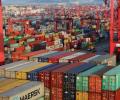
Under the scheme, also called the Export Credit Insurance Scheme, the insurance guaranteed could cover up to 90 per cent of the principal and interest.

Drink enough water, focus on your portion sizes, cut out junk food, start a walking routine, and stay consistent.
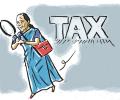
Experts pointed out the move will only help taxpayers temporarily, as the tax liability remained the same and the date for advance tax has not been extended.

The income tax department estimates total collection to be between Rs 10.5 trillion and Rs 10.7 trillion against the revised target of Rs 11.7 trillion.

While there has been a rash of growth estimate cuts, including a 0.70 percentage point reduction by the RBI last month to 6.1 per cent, the Japanese brokerage's estimate is so far the lowest.

According to a RBS report, 'the impact on India's current account deficit should be significant, cumulatively amounting to 1.9 per cent of GDP' provided for the full year FY14 prices for both oil and gold remain at current levels and aggregate volume gold demand remains stable.

The measures to reduce the current account deficit should have focused far more on narrowing the trade imbalance, principally through export facilitation and linked FDI, says Nitin Desai.

Instead of conceding the demand for a cut in personal income-tax rates, Finance Minister Nirmala Sitharaman should phase out many exemptions in both personal and corporation taxes, suggests A K Bhattacharya.
The 30-share Sensex ended up 170 points at 20,634 and the 50-share Nifty ended up 54 points at 6,127.

The gains will be gradual as the measure will be executed over 12 months or so.

While the likelihood of these states going the Lanka or Greece way may be an alarming assessment, the financial situation of some states such as Punjab and West Bengal is indeed quite weak.

Jaitley's fiscal arithmetic, Crisil said, is "shaky", and the scope for fiscal slippage "remains high".
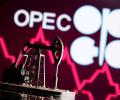
Changes in global oil and gas rates matter more to India's economy than other major economies because the country imports around 87 per cent of its oil, half of its gas in the form of LNG, and over 60 per cent of its LPG.

'On the tax front, most of the Budget proposals are sensible'.

RSS-aligned Bharatiya Mazdoor Sangh (BMS) on Monday expressed disappointment over the government's budget proposals with regard to divestment and foreign direct investment, especially in the insurance sector. The BMS, however, lauded the government for its current efforts on the massive vaccination programme, a special scheme for tea workers in West Bengal and Assam, labour oriented push on infrastructure projects in construction sector and development of five major fishing harbours viz. Kochi, Chennai, Visakhapatnam, Paradip, and Petuaghat as hubs for economic activities etc. On other Budget proposals, it said in a statement that "mixing the beautiful concept of Aatmanirbhar Bharat with FDI and disinvestment in the Union Budget is disappointing for the employees".
S&P has maintained a stable outlook on the basis of their expectation that over the next two years the growth will remain strong and India will maintain its sound net external position and fiscal deficit will remain elevated but broadly in line with their forecast.

In fact, no other recent Union Budget has held so much significance for the Indian economy as the one to be presented in about six weeks from now, notes A K Bhattacharya.

President appealed to Congress to pass the budget while pushing Republicans to agree to hike the borrowing limit.

US President Barack Obama has stepped up his personal engagement with lawmakers over the government shutdown, which the White House hoped would help in resolving the current economic crisis including the one of raising the debt ceiling by October 17.
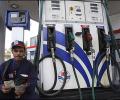
The recommendation to slash duty was made by the Bharatiya Janata Party to ease retail prices of petrol and diesel.
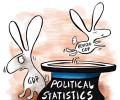
The brokerage said the consolidated fiscal deficit, including that of the Union (3.6 per cent), the states (2.6 per cent) and the off-budget borrowings which are being resorted to increasingly is a worry.
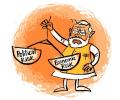
'Should the most important part of economic reform not comprise the way we look at the fiscal deficit?', asks T C A Srinivasa Raghavan.

The CDS has the option to focus on key areas of capability development to fight new generation wars or get bogged down in trying to bring cosmetic changes to humour the political leadership, asserts Brigadier Narender Kumar (retd).

The minutes of the December MPC meet reveal members felt the current spike in the headline inflation rate was due to a temporary supply shock on the food front, expected to moderate by the second quarter of 2020-21.

But it is disappointing to note that Sitharaman's third Union Budget continues to promote a few problematic ideas, observes A K Bhattacharya.

Never before in post-reforms India have Union Budgets seen a steady reduction in fiscal deficit for five consecutive years, points out A K Bhattacharya.

Companies in China, South Korea and Indonesia pay 25 per cent tax, while those in Malaysia pay 24 per cent. Only Japan has a higher tax than India at 30.6 per cent. Hong Kong has the lowest corporate tax rate of 16.5 per cent while Singapore has 17 per cent rate and Thailand and Vietnam levy 20 per cent tax on companies.
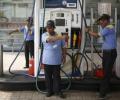
CARE Ratings, in a report, said it foresees an increase in the retail prices of petrol and diesel in the coming few days, depending on how the oil markets react in the reduction in supply from the cartel.

'A time-wise, as well as price correction, so that the market can absorb the gains made over the past 17 months.'

He did not believe in any fiscal puritanism. In 2012, when it was almost certain that the government will breach the 2012-13 fiscal deficit target, he wrote that in abnormal times, abnormal measures are required to get back to normalcy.
Faced with revenue shortfall, Railway Minister Mallikarjun Kharge is likely to refrain from announcing many populist measures in the interim budget on February 12.
The challenges before the coming Budget are more daunting than those in 2021, reveals A K Bhattacharya.
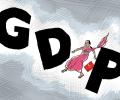
Moody's said the government will face challenges in achieving its deficit target for the fiscal year ending March 2021, amid persistent structural and cyclical headwinds to growth.

This is the fifth straight cut in rates by the Reserve Bank of India in as much policy reviews in 2019, and takes the total quantum of reductions to 1.35 per cent.
Amid expectations that Thursday levy cut would greatly facilitate reduction in STD, ISD rates
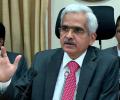
While efforts are being mounted on a war footing to arrest its spread, COVID-19 will impact economic activity in India directly through domestic lockdown. The second-round effects, it said, would operate through a severe slowdown in global trade and growth.
